Castle Lake
The Dark HalfCastle Lake is the setting of the Beaumonts’ summer house and the landscape through which the novel’s final crisis unfolds. Its familiar shores and roads become uncanny as enormous numbers of silent sparrows gather, first watching and then surrounding the house; the lake district ultimately becomes the route by which Thad Beaumont reaches his family and the place where the birds carry George Stark away.
Setting and association with the Beaumonts
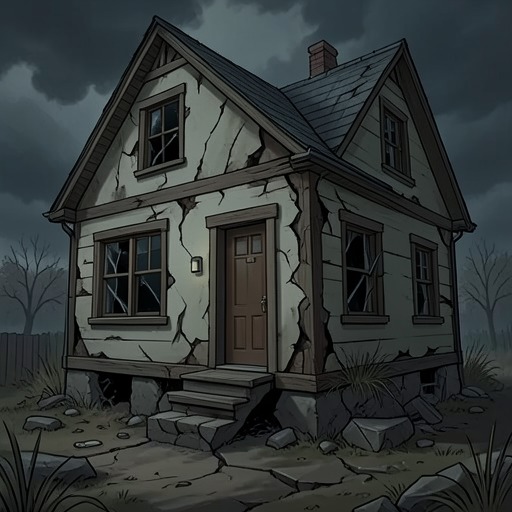
The summer house stands beside the north bay of Castle Lake, with the water opening behind it and a small lawn facing the driveway. In a dream, Thad recognizes the property as his family’s summer place rather than their winter home in Ludlow. A sale sign stands beyond the drive, an ordinary detail that makes the familiar house seem unsettled even before he enters it. The house’s hallway, stripped of its usual rug-runner, feels hostile to him: the change is minor, but it makes home seem vulnerable to disconnection and dread.
The lake also anchors the Beaumonts’ public exposure. When Thad arranges for a photographer to place a false gravestone in the cemetery for a People magazine story, he explains that he and Liz have a summer home in town. Digger remembers the request and the property, linking the lake community to the staged account of George Stark’s supposed burial. The place thus holds both the family’s private retreat and a public fiction about Stark’s disappearance.
The lakeshore and the gathering birds
As the confrontation approaches, Castle Lake’s surrounding roads and seasonal cottages become part of the crisis. Alan Pangborn drives along Lake Lane and stops at the Williams family’s A-frame, several driveways short of the Beaumont place. From there he sees hundreds of sparrows on the roof, trees, rocks, and dock. The flock is silent. Crickets, water against the dock, and a plane passing west toward New Hampshire are audible, but ordinary activity on the lake is absent; the birds dominate the scene without making a sound.
The birds do not behave like an undifferentiated natural background. One lands on Alan’s shoulder, hops onto his hand, and then returns to the driveway. As the trees fill with sparrows, a branch cracks under their accumulated weight. Alan retreats up the drive and sees the birds covering his cruiser, while the stretch of Lake Lane ahead remains clear. He senses that the flock is holding back, as if the area were a staging ground, though he cannot know whether the birds have come for Thad or Stark.
The scale becomes clearer at Gold’s Junkyard and Auto Supply, where sparrows carpet the vehicles piled across the rear acreage. Later, Thad encounters a sharp boundary in the road: the flock begins less than twelve feet ahead of his stopped car. A bird settles on the hood and peers at him, while he understands that reaching the house may mean driving through the mass. Near the Williamses’ A-frame, the birds conceal the building and the landscape beyond; then, hundreds of yards from his own house, they stop as abruptly as they began, leaving the road clear. Thad pulls over and vomits, confronted by a silent, waiting expanse behind him and the lake’s bright reflections beside the road.
The lake house under siege
At the Beaumont lake house, the flock gathers until the surrounding landscape appears to have been remade. From the window-wall, Liz sees birds covering the deck, darkening the slope to the lake, and filling the sky as more arrive from the west. Alan, already aware of the flock’s presence near the Williams property, tells her to stay quiet so Stark will not hear. The lake’s wooded margins and open water no longer offer an ordinary sense of refuge; the family home is enclosed by a presence whose purpose remains uncertain to the people inside.
Stark’s behavior at the house contrasts with the alarm beyond it. While holding Alan under his control, he looks toward the sunlit woods and talks casually about getting food, presenting the country setting as pleasant. The scene’s calm domestic detail is set against the flock’s silent advance and the hostage crisis within the house. Castle Lake thus brings the novel’s two forms of danger together: Stark’s deliberate human violence and the birds’ vast, unexplained agency.
The birds’ role in the ending
The sparrows’ arrival culminates in Stark’s removal. As Thad realizes that the psychopomps have come to escort Stark back to the land of the dead, the flock fills the air and gathers on him. The event completes the movement from distant observation to direct intervention: birds that had watched from roadsides, roofs, trees, and junkyard vehicles now become the force that carries the conflict to its conclusion.
Castle Lake is therefore more than a scenic setting for the family’s summer residence. Its connected shoreline, cottage roads, wooded approaches, and isolated house organize the final sequence, allowing the flock to appear first at a distance, then to block Thad’s route, and finally to converge on the house. The familiar local landscape remains physically recognizable, but its silence and sudden boundaries make it seem governed by powers outside human command.